A Portal to the Unseen World

Thirty Minutes' Notice
On a sleepy Saturday morning when I was 8 years old, my father shook me awake. “Get up, buddy. We’re leaving in 30 minutes.” One sleepy-eyed bowl of cereal later, off we went and I had no idea what I was in for. In California’s Central Valley we met up with my father’s birding friend, who was eager to show us around for the day.
I spent the morning entirely mesmerized. Skulking pheasants, sparrows, ducks: it all pulled at my attention. But the day was gloomy, rain kept threatening, and somewhere in those gray hours my father could feel my 8-year-old energy starting to drain. So he offered me his camera, along with a very, and I mean very, basic playbook on how to operate it. I took it and pointed it at the only bird around, a large black ground bird.

Then, like something out of a movie, the sun broke through the dense clouds and lit up the back of the Common Raven in front of me. Through the lens I saw a quiet shimmer of green and purple hiding in its black feathers. It made no sense to me. This was an ordinary black bird, the kind you walk right past without a thought, and somehow it had been carrying all of that color the whole time. In my young eyes and wide imagination, it had to be the camera’s doing. Like this tool was somehow a portal to the unseen world.

From that moment on, I was hooked.
We birders call that first bird a spark bird, the one that lights the fire. Mine was no gaudy showstopper. It was a raven on a gray morning, all subtle beauty and intelligence. That was 22 years ago.
Alone on a Mountainside
Twenty-two years is long enough to learn that there is no such thing as a full day of bird photography without complications. Unexpected moments are not just common in this work. They are expected. Wind alone can be an absolute nightmare.

The morning I think about most was in the highlands of Ecuador, where I was after a Rainbow-bearded Thornbill, a tiny, almost unreal-looking hummingbird. I spent the entire morning alone on that mountainside: brilliant light, perfect weather, birds singing. And then, finally, my bird. I watched how it moved, worked out where my shot would happen, set myself up, and waited. And waited. A full hour passed before the thornbill finally landed exactly where I wanted it.
Moments into the shoot, a vehicle came around the corner. I couldn’t believe it. Hours of tracking and waiting, success at last, and the bird was scared off before I could grab more than a few images. All of that work, and I got just a few moments to enjoy it.

So why keep chasing something that can frustrate you that deeply? Because at 30 years old, I feel genuinely privileged to still be following the passion that was lit on that gloomy California morning. Bird photography has carried me around the world and let me experience life in some of its purest forms, and it has given me a window into a realm the everyday person rarely gets to appreciate. Somewhere along the way, that window became my purpose. I get to share this part of the world with people who are unaware it exists, or who simply deem it unnecessary to acknowledge. For me, the moment a photograph makes one of those people stop and really look is the entire point.
Obstacles, Not Dead Ends
Traveling to new destinations and capturing new behaviors is even more exciting now that I can reach a wider audience with it. Whatever a shoot asks of me, mountains to climb or rain showers to brave, what could be a dead end becomes an obstacle to get around instead. That is a really freeing feeling.

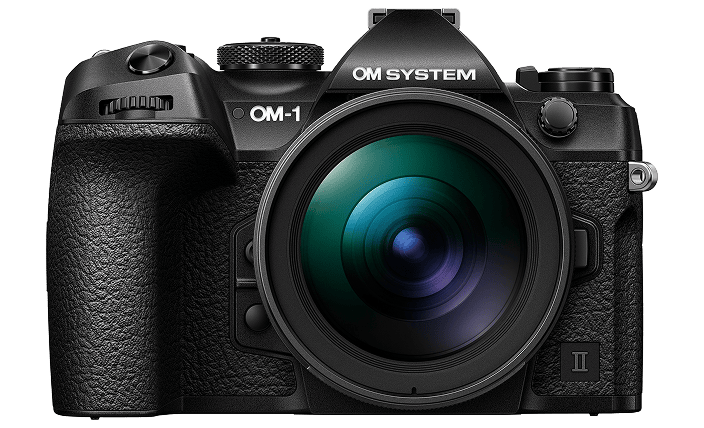
Some of that freedom is physical. My OM SYSTEM kit is small and light enough that I can stay out longer and push farther into the field than I used to, and more time out there means more chances to be standing in the right place when something remarkable happens.

Action photography is my favorite, and this is where it really shows. So much of what makes a bird worth photographing happens in a split second that used to be over before I could react. A feature like Pro Capture Mode lets me come home with images I never would have even considered possible. There is real satisfaction in that, in finally catching a moment that used to slip away every single time.

Catching those moments has changed where my photography can go: past what I already know how to pull off and into experimentation and discovery. And it is not only the moments I capture. With fewer battles to fight in the field, I find I appreciate the bird in a deeper way while the shoot is still happening.

Until I Can No Longer Lift a Lens
My goal has always been to create a sense of wonder and appreciation through my photography. To inspire travel, and the pursuit of knowledge in something most people disregard. I plan to keep at it until I physically can no longer lift a lens.

I want future generations to get out and explore this world through bird photography. So when I get the chance to talk with them about it, I keep it honest. Some days end the way that morning in Ecuador did, with the bird gone and a few frames to show for hours of work. This pursuit will frustrate you beyond belief, and you will find yourself hopelessly addicted to it anyway, usually in no time at all.

As a kid I flipped through field guides and the same skills I built on backyard birds eventually carried me to a Resplendent Quetzal trailing its emerald tail through a Costa Rican cloud forest. It starts close to home. The travel will show you corners of the world most people never get to see, and the stories you bring home can change people's lives for the better. That is an incredible gift to be able to give. And in the end, for me at least, this is where I have found peace.

I know I will never stop. I am excited on the last day of every adventure, because it means the next one is just around the corner. And somewhere out there is another kid about to point a camera at an ordinary black bird, with no idea yet what it has been carrying the whole time. I hope to help pull a few of those kids into bird photography the way my father pulled me in.
If you give it the chance, it will give you an amazing life. It certainly has for me.

Photography by Ben Knoot
Written by Ben Knoot
Edited by Michael Bonocore
Profile
Ben Knoot
USA
Ben Knoot began photographing birds at age 8, when his father and a birding friend introduced him to the hobby in California's Central Valley. Twenty-two years later, he is an OM SYSTEM Ambassador and a widely recognized bird photographer who travels the world while operating his tour company, Experience Nature Tours. The company and his teaching follow the same philosophy as his photography: showcase the most beautiful aspects of the natural world so that other people can enjoy and experience nature the way he does. Ben shoots a wide range of OM SYSTEM gear, and his favorite combination for bird photography is the OM-1 Mark II paired with the M.ZUIKO DIGITAL ED 150-400mm F4.5 TC1.25x IS PRO.