In Search of Underwater Scenes
Yet to Be Discovered

Learning to Photograph Beneath the Surface

I was born and raised in Saitama, a prefecture with no coastline. Although I had always loved nature, the ocean was never a familiar part of my life. I didn't start diving until I was twenty-three, and even that began almost on a whim.
Many people first try a discovery dive before deciding to become certified. I took a different path. I went straight to Okinawa with the intention of earning my diving certification.
In the beginning, I had little opportunity to appreciate the underwater world. I still remember how unnatural it felt simply to breathe through a regulator. For quite some time, being underwater itself was a source of stress.

I didn't begin taking photographs until after I had earned my certification and started diving around mainland Japan, including Izu. Using a compact digital camera, I photographed fish and underwater scenery whenever I could. But my photographs never looked the way I expected. The colors disappeared, everything seemed to take on a green cast, and I couldn't understand why.
Today, it's easy to find answers online. At the time, however, there was no YouTube and social media had yet to become part of everyday life. There was no one to teach me. I learned by reading magazines, experimenting for myself, and repeating the process over and over again.
After every dive, divers fill out a logbook, recording details such as the dive site, dive time, and the marine life they encountered. It was during those moments that I began sharing my photographs with other divers. Gradually my photographs improved, and before long more and more people began using them.
Indonesia, Where Every Dive Brings a New Discovery

Over the years, I've dived in countless places, including Mexico, the Maldives, the Philippines, Indonesia, and islands across the South Pacific. Among them all, Indonesia has become the place I return to most, and the focus of my life's work.
The waters of Southeast Asia, including Indonesia, form part of the Coral Triangle, one of the richest coral reef ecosystems in the world. Visibility isn't always perfect, but the extraordinary diversity of marine life more than makes up for it. Each dive site offers something different. The underwater scenery changes, the creatures change, and every island has its own unique character. No matter how many times I return, there's always something new to discover.
The ocean is also full of unexpected encounters.
Sometimes the animal you're hoping to see never appears. Other times, something entirely different happens. I once set out to photograph whale sharks, only to have dolphins join us instead.

On the other hand, there are countless photographs I never managed to take. When I first started, I would swim against the current if it meant getting closer to the subject. I simply wanted to get closer so I could take the photograph.
But it's impossible to catch up with fish underwater.
As I gained more experience, I came to believe that fish aren't something you chase. They're something you wait for. Waiting causes less stress for the animals, and more often than not, they're the ones that come closer to you. Looking back, it seems obvious now. But over the years, the way I approach marine life has changed significantly.
An Essential Companion by the Water


I've been using OM SYSTEM cameras since the Olympus days.
Underwater photography involves carrying an enormous amount of equipment. In addition to diving gear, I travel with separate cameras and lenses for underwater and topside photography, along with everything else I need for the trip. Since most airlines allow only 20 to 23 kilograms of checked baggage, keeping my equipment lightweight is extremely important.
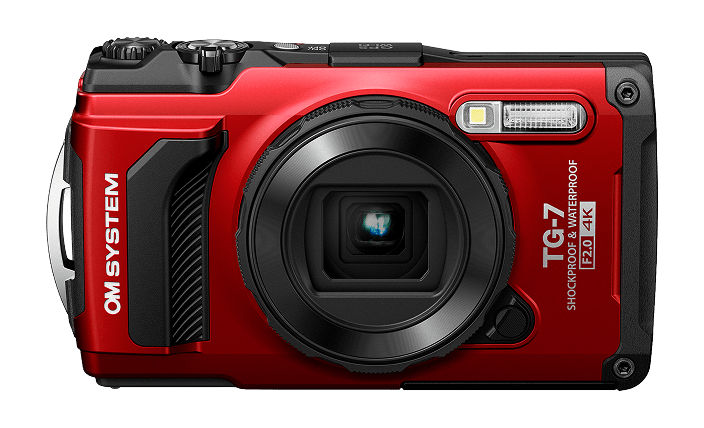
That's one reason I continue to use OM SYSTEM cameras. They're remarkably compact and lightweight. The TG series, in particular, is small, durable, and waterproof for demanding conditions. I never have to worry about water getting into the camera, and with an increasing number of third-party accessories, including wide conversion lenses, it's capable of handling almost any situation.
Many of my friends and fellow diving guides use the TG series as well. It has become an indispensable camera for photographing around the water.
Discovering Wreck Diving

Another of my life's works is photographing shipwrecks, aircraft, and other remains resting on the seafloor.
It all began in 2010, when a dive guide took me to the USS Emmons off Okinawa. Today, the Emmons is well known among divers, but at the time it was still a relatively little-known site.
Seeing the wreck with my own eyes left a profound impression on me. The reality of standing before a relic of war beneath the sea was unlike anything I had experienced before.
Since then, I've travelled around the world photographing wrecks, and so far I've documented between 150 and 200 ships and aircraft.
With the exception of vessels intentionally sunk to create artificial reefs, most shipwrecks are tied to tragic events. That's why I try to record every detail of the wreck itself with care. At the same time, I hope to capture the beauty of the sea and the marine life that now surrounds it.
If my photographs encourage people who were previously unfamiliar with these places to take an interest in history or the ocean, I feel they have served a meaningful purpose.
In Search of Places No One Has Ever Seen

For many years, I returned to the same destinations as part of my long-term projects. These days, however, I'm increasingly drawn to places I've never visited before, particularly Central and South America.
I hope to encounter landscapes that few people have ever seen.
Planning a dive around tides, currents, or the phases of the moon is, of course, an important part of underwater photography. But recently, I've come to enjoy travelling with fewer expectations, visiting a place simply to see what I might encounter. If something extraordinary appears, I consider myself fortunate.
Photographing shipwrecks also taught me something else: every subject has a story behind it.
Every ship has its own history, and every history is connected to the lives of the people who were part of it.
Underwater landscapes are shaped by the culture and environment of the places where they exist, for better or for worse.
Going forward, I hope to create photographs that tell not only what lies beneath the surface, but also the stories of how people and the sea are connected.
Photography by Hiroyuki Tomura
Written by Nahoko Ando
English translation by the OM SYSTEM team
Profile
Hiroyuki Tomura
Japan
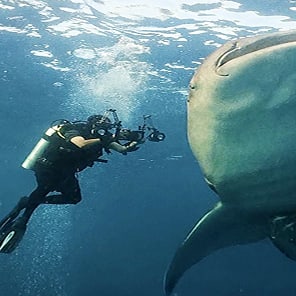
Hiroyuki Tomura (born in Saitama, Japan, in 1982) is an underwater photographer whose work ranges from tiny reef creatures to sea turtles, sharks, sea lions, and other large marine animals, capturing them within the broader underwater landscape.
After graduating from the Photography Department of Vantan Design Institute, he began travelling the world in search of diverse marine life. Since 2010, he has also dedicated himself to documenting shipwrecks and aircraft lost during the Second World War, continuing to photograph underwater war relics around the world. His work has appeared in magazine serials and exhibitions at peace memorial museums and other institutions throughout Japan.
His published works include Memorials Beneath the Blue Sea (2020) and Memorials Beneath the Blue Sea II (2022), both featuring underwater war heritage sites. Since 2024, he has served as a Research Fellow at the International Maritime Research Center, Graduate School of Maritime Sciences, Kobe University. In addition to his photographic work, he is an active writer and lecturer.